Thursday, October 15, 2015

You were made for this (thermo cycles)

There was a moment during class tonight that felt exhilarating.

I don't mean that hyperbolically.

I mean that I was overcome with wonder and that dovetailed into a teaching moment.

A student asked me to distinguish between a refrigeration and a heat pump cycle--they are very similar processes.  In fact, the only difference is in how you use them.

I didn't have a very clear or concise explanation the first time--to be perfectly honest, I realized in that moment that my understanding was incomplete--and I was supposed to explain this to the class.  At that point, you can either think really fast on your feet, or acknowledge that you don't know.

Normally I would tell them I'd get back to them.

This time was different.

Refrigeration cycles are an interesting concept because they use materials that boil at very low temperatures.  I understand how refrigeration cycles work very well.  It's fundamental to much of my work.

In that moment I decided to try and work out the explanation of a heat pump to myself while I did it for them.  Kind of risky, but since I knew how the 'opposite' cycle worked, I should be able to convince myself.

And in that moment, I had it!  For some reason, the heat pump cycle had previously seemed to have a kind of magical quality to it.  For years I never really felt like I understood it.

Now I had the key!  And I was able to jump right in and explain it with a metaphor/picture that, while absurd*, made sense.

Normally when these little realizations about how the world works come, I'm not with my 'right' people.  That is to say, ChE's.  This time however, I had a captive audience of budding engineers, and they weren't allowed to leave.

That's why it was exhilarating: an epiphany in the presence of a captive audience that has the background to appreciate and learn from it.

Most times I would keep something like that to myself and enjoy the moment amidst my lawyer, biologist, accountant, public administration, social worker friends.  This time though, I got to share my realization (had to really), and in the process looked like I had my s*** together.  I feel like I was made for this.

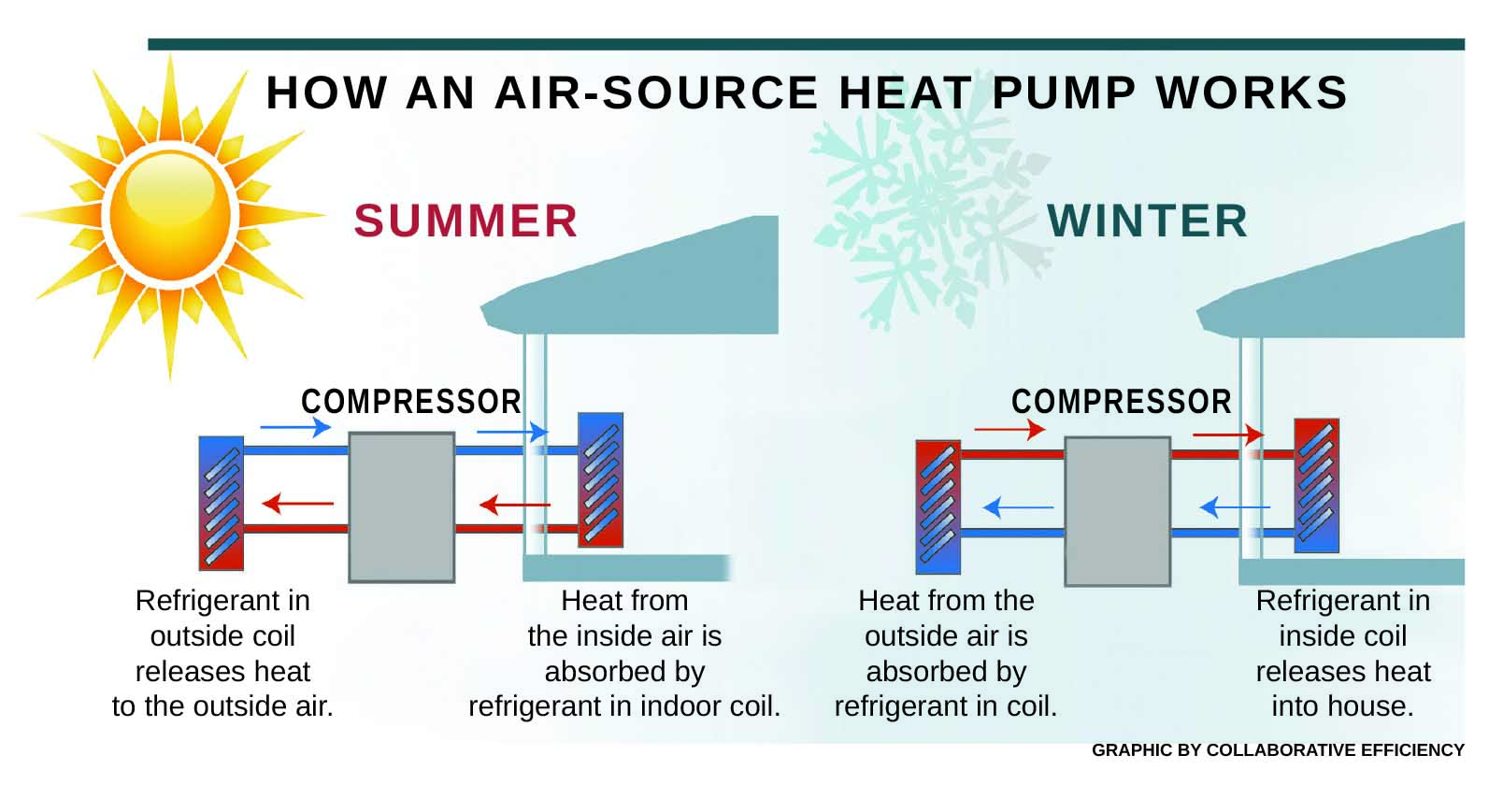
*a heat pump cycle is basically functioning like a refrigerator for the earth (when the source is geothermal).  You are taking 'heat' in the ground (thereby cooling it) that is at a lower temperature than the object to be heated, a house for example, and boiling a (low T, low P) liquid refrigerant.  The power input comes in compressing the (low T, low P) refrigerant vapor into a (high T, high P) vapor.  That vapor runs through a condenser and gives up its latent heat of vaporization to heat the house.  You then throttle the (high T, high P) liquid through a valve back to a (low T, low P) liquid and boil it with low grade heat from the ground to start the cycle again!  You're making the ground refrigerated and using that heat in your house!  It's the opposite of a refrigerator because our system of interest in a refrigerator is the insulated box--the heat gets expelled to your kitchen (the surroundings).  Now, the system is your home, and you're adding heat to it by taking it from the low temperature ground (surroundings)!!!  The beauty is that you can reverse the process and have air conditioning--now you're just putting that heat in the ground!


Tuesday, October 06, 2015

Communion prayers

I don't know about you, but I'm never quite sure what to pray while the bread & wine is being passed out during the Eucharist.

Usually it's a time of confession for me--giving myself and my weakness up--sometimes filled with guilt, and sometimes sweet release.

There's probably no 'right' or 'wrong' prayer in this time.  The mood is generally of repentance and confession, but sometimes it's easy to think of other parts of our relationship with God.

One of the most common things I think about with God during that time is about our place in relation to him: our place in the cosmos, in his plan, in the lives of those around us; in a word, cosmology.  Or...spirituality.

εὐχαριστία (eucharistia)

We give thanks for what we're a part of.

I wonder what other Christians feel and pray during this sacrament.

Tuesday, September 22, 2015

Just jam it all in there--God

This September is the start of another semester.

If I were playing life safely I would have no business thinking on the semester timeline.

But I'm not.  I don't believe that to be a satisfactory or responsible way of life.

I've mentioned this to some friends before, but I want my tombstone to read:
"He did as many of the hard things as he could."
That doesn't mean I succeeded at the hard things--haha, no definitely not! Lordy, no!

It means that until you/I try to do the things you/I think are too difficult for God to work through with you/me, we won't do the things.  The things are waiting for you.  All of them.  Every last one of them.

I thought that the things were chemical engineering and graduate school.  And then I left graduate school with a measly M.S.  The PhD has eluded me.

Certainly that stung.  But percolating in the back of my mind had always been Young Life.  Ever since I left high school I had wanted to be a leader.  In college I immersed myself in my studies (same for graduate school).

Now that I had a normal job that didn't dominate 95% of my time, I decided to jump back into it.  Not the hardest thing--certainly not an easy thing--but something definitely worth doing (my own life was changed in HS due to the love of my leaders).

Sounds like I was game to follow God reasonably and do what some goody twentysomething might do with their time.  How gosh golly prosaically nice of me.

BUT WAIT!

God had other things in mind.

I'm not one for putting words in God's mouth.  But right now, it looks like God might want me to teach engineering to college students at a Christian college.

Two years ago, the two previous sentences would have caused me to give a wry smile then burst into laughter.  Here's what I would have said:
"I'm earning my PhD to manage a lab in pharmaceutical development!  I might teach at the end of my career. 
And I don't even know if I'm a Christian, or what that should even mean."
I'm not going to lie--these are some of the hardest things I've ever done (if not in technical skill but at very least in combination).  But I'm not drained nor do I feel like I'm dying inside (like much of grad school).

The work is hard.  The work is good.  God has way crazier and bigger plans for you than you might expect--that's what's so cool.

Maybe you'll find yourself leaving the continent, fostering a 5 year old in your twenties, teaching college or working quietly in the lives of those in your community faithfully.

God wants to use the life you're living now--that's what you've got.  That's all we're given.

Wednesday, September 09, 2015

Belonging to a room

My fear of public speaking goes back to 8th grade.  We were tasked with doing a research project over the semester and presenting both a written report and orally to the class.  My sexy topic was the Electoral College.  I didn't really prepare much for the presentation, though I'm sure the report was pretty well written for an 8th grader.  In fact, I'm sure I didn't even practice it more than once in the mirror.

It went badly.  I remember reading awkwardly off of note cards, rushing through it, and being very disappointed with the grade that came later.

In middle school, no one really feels like they belong--I was no exception.  And in fact, until recent years, probably starting in college, I never really felt like I belonged anywhere.  That's when I found that I was pretty good at chemical engineering.  And I liked it.  A lot.

Recently I reflected on why I so hate to speak in public.  I was in the shower.  It was a couple days after I had given a toast as the best man at a beautiful wedding, where I knew a lot of friends.  Of any place to feel as though I belonged, it was that place.  More than anyone else, at any wedding, other than the bride, groom, and their families, the best man and maid of honor belong.

The realization came afterwards of course.  The toast went as well as it was going to, given my confidence at the time (0).

But it made me think that belonging, for me at least, is a huge component to any social situation, and much more for public speaking.  In order to address a group, of course it behooves you to feel as though you belong--as though you have something legitimate to contribute to the conversation (even if it's one way).

In contrast, I have much less trepidation about my role this fall as a part-time lecturer at a local college.

This is crazy.  I never went into academia because I wanted to teach--in fact, I went in denying that I would ever do such a thing unless it were after a long career in R&D doing pharmaceutical development (still my dream).  But here I am, ready to teach a course to sophomore students.

Last night was the first lecture.  Both professor and students belonged in the room.  It went as well as could be expected.  Truth be told, I'm really excited to explore this course with my students (if I can kill my 'ums')--my first impression is very good (they have very good taste in literature).

Tuesday, August 04, 2015

the completeness of fragility


The enormity and completeness of our fragility is truly terrible to conceive of.  In only a moment, the unknown knocks at our door and envelopes a loved one.  We have hopes and faith in what comes for them and us, but none of us ever truly know what lies there.  Death is terrible because we have no basis to judge it by--we only know they have been removed from us.

Life and consciousness--so complexly engendered--we take perversely for granted.

In moments following the loss of young lives, we reflect with questions of 'why,' that have no conceivable answers.
As a Christian, my hope is in not in the temporal--however, it is my only experience.  I struggle on days like today when young people are lost to us.  My hope in eternity is not unshakeable.  If I'm honest, how can it be?  To be sure I trust, to a feeble extent, this timeline will not be our only experience, but faith is not confirmation.  I both envy and don't understand those who are sure; I despise and decry their surety.  Our belief does not make things so, and our faculties tend to belie supernatural claims.  Inherent in this knife-edge is the conception of our own humanity--how cynical or trusting are you?

Today I'm cynical, making grief hard.  Moments of peace may flit about my thoughts--they draw my mind out of despair and remind me: we can hold steadfastly to promises though we aren't able or prepared to evaluate them.  I want nothing more than to evaluate their merit, but: I choose this life because a man named Jesus once laid every ounce of his humanity and divinity on the very same line that we cross--because he stared fragility in the face, and eschewed beautiful promises which give us peace.

In that moment Jesus said, "I know."  That's enough for me.

That alone is able to give me a semblance of peace and comfort on a day like today--to allow myself to pray sincerely that God's will be done.  I rarely think of the Heidelberg Catechism in moments like this, but this is the benefit we have knowing that God created and upholds all things:
"for all creatures are so completely in his hand
        that without his will
        they cannot so much as move."

=====
for David Talsma and Chase Froese, Sandra Bland and Eric Garner and Walter Scott; for those grieving and those unsure how to.
for all creatures are so completely in his hand
that without his will
they cannot so much as move
- See more at: http://www.heidelberg-catechism.com/en/lords-days/10.html#sthash.F4EnAA0n.dpuf
for all creatures are so completely in his hand
that without his will
they cannot so much as move
- See more at: http://www.heidelberg-catechism.com/en/lords-days/10.html#sthash.F4EnAA0n.dpuf
for all creatures are so completely in his hand
that without his will
they cannot so much as move
- See more at: http://www.heidelberg-catechism.com/en/lords-days/10.html#sthash.F4EnAA0n.dpuf
for all creatures are so completely in his hand
that without his will
they cannot so much as move
- See more at: http://www.heidelberg-catechism.com/en/lords-days/10.html#sthash.F4EnAA0n.dpuf
for all creatures are so completely in his hand
that without his will
they cannot so much as move
- See more at: http://www.heidelberg-catechism.com/en/lords-days/10.html#sthash.F4EnAA0n.dpuf

Thursday, July 23, 2015

the scattered pieces

We all change in many ways throughout our lives--many changes are borne about slowly through time and we never notice them.  The laugh lines deepen in our faces, our skin becomes weathered (or chemically altered...oops!).  Some changes happen in an instant and our very outlook on life is shattered at a new revelation.

In more ways than I could have imagined, I am a radically different person from who I was only four years ago.

In junior year of college (2010) my roommate at the time, Mark, asked me very sincerely on the way to Founders one Monday night:
"Are you happy Steve?"
At the time, my answer had been something along the lines of:
"Yes, mostly.  Sometimes I wish I didn't spend so much time studying.  Sometimes I wish I had gone out and done more stupid stuff, but I don't regret the choices I've made."
I've since gone back to that question periodically and re-evaluated my life.

My answer during the last three years has been:
"Um. Yes?"
"Hmmmmm..."
"No.  Kinda yes?  In many ways yes...but permeated with suffocating dread."
There came a point at which my ability to put up with circumstances, people and being healthy emotionally hit a wall.  My self-confidence had been gradually eroded away and crushed months before this point.

The only things really holding me together were my family (as best they could from 500 miles away), my friends (who I would have crumbled to pieces without) and whatever tattered and paltry faith in God I was unsure I wanted to cling to.

When that moment came, I made a decision.  Many people make this same decision, for many and more reasons: to leave graduate school.  In a way I was lucky--I left with a well respected degree in a field I love from a great school.  I struggled with the initial perceived failure of what that choice meant for months.  I don't regret it any more, though I did at first.

August of 2014 began my struggle to pick up the pieces of what I thought my life would become.  It was when I began to try and find meaning in who I was, what I wanted, and who I would become.

Looking back over the last 11 months, I evaluate again that inexorable question:
"Are you happy Steve?"
This time, my answer is longer, more nuanced, and accompanied by an Oxford comma.

Now I can say that I am happy.
I can say that I'm not looking helpless and confused at the floor and the pieces scattered there.
The person in the mirror has deeper laugh lines, and lines from anxiety (the stress tic has been gone for over 6 months!), but there is a new kind of confidence there--not naive and stupidly brave, but rebuilt and with experience.

I have many people to thank for this change; many to thank for happy, confident, peace:
Close friends, new and old.
They challenge me, they love me, they hear me and they know me.
We talk together, eat together, we drink together (way too much!).
We grieve many things together--death of the very old and the impossibly young, infidelity, and shattered friendships--and we come through to the other side.
Supervisors that see the good and better in me--that let me figure out how to be more excellent.
They give me crazy opportunities I would have never imagined.
They trust me to take on projects seemingly too big for me too soon, that were just right.
Mentors that remind me of my strengths and encourage me in my weaknesses.

With that, today I can say I'm the person I want to be--satisfied with who I am--looking to do the next hardest thing I can find, and simultaneously terrified at the prospect!
I'm not anxiously looking for anyone to 'complete' me (even though people love to ask if I'm seeing anyone, haha!), because they'll be pretty obvious to me when I see them.
My emotions are healthier.
My people are beautiful--they are the friends that I have always wished for.
My family is finally close to me.
My faith is a work in progress, different, shrunk and grown, expanded and with punctures and scars--but I still have it.

Monday, July 13, 2015

Whyyyyyyyyyyyyyyyyyyyyyyyy

...do my coworkers continue to insist on making jokes about assassinating our president?

Thursday, July 09, 2015

Sneeze at the Sun

I wanted to get more serious about recording music, so I decided to do a little cover album of some of my favorite songs using my baritone ukulele exclusively.  The result is "Sneeze at the Sun," a humble little offering that taught me a lot.  Forewarning, my voice is very "eh," but I refuse to doctor it...sorry.

Music recording is fun.  All you need is a snowball and some audacity.


Schwarz zu Blau has been one of my favorite songs since my coworker Dirk introduced it to me in 2010 when I worked at BI.  Peter Fox and Seeed were some of his favorites, along with die Fantastischen Vier.  I've been rapping it (when I'm alone) since that summer--it seemed like something fun to set to ukulele.  It was also really helpful in expanding and developing my ability to converse in German.  I learn new things every time I pick up a new song.  The Berlin hiphop/reggae scene is strong.  Check out Marteria (YT) if you like Peter Fox.
[lyrics][youtube (Peter Fox)][my cover]

I Walked from The Age of Adz is from the point of view of a former lover--the things they want to say, but can't.  It might be from separation or from death.  Either way, it's beautiful and hauntingly poignant--easily my favorite song from the album.  I listened to it a lot in college.  This is my acoustic, and much faster version.  I'm still not sure what to think about the speed.  Some days I wish I had slowed it down, other days I like it zippy.  Whatevs.

I got a kind of ethereal voice effect by simply recording 4 tracks each for the right and left sides (I sang it 8 times--you have to be careful to sing it almost identically each time if possible).  I did this with all of the vocals on my album, but only this one has more than 1 vocal track for each side.  This technique also helped me overcome the difficulty in covering Sufjan, because his voice is wayyyyy better than mine--it enables you to kind of average out your voice over a few takes to make it sound better when they're combined (it's all my voice undoctored, but layered over top of other takes).
[lyrics][youtube (Sufjan Stevens)][my cover]

Hallelujah is one of the first songs I grew comfortable playing on my first uke and I love just playing and singing it whenever.  Cohen's original and Buckley's cover are my favorites.
[lyrics][youtube (Buckley)][youtube (Cohen)][my cover]

Free Fallin' by Petty brings me back to high school and Young Life and much of what is good from that time.  Free Fallin' reminds me of when I learned to love well from my friend Justin.  It brings back people and emotion and silliness--I still want to glide down over Mulholland.
[lyrics][youtube (Tom Petty)][my cover]

Mighty to Save is one of those songs that describes me at multiple points in my life--how I feel about myself and interact with others.  If I had a mission statement about how I viewed my life as a Christian, this could be it.
[lyrics][youtube (Hillsong UNITED)][my cover]

Black Sun was introduced to me recently by my friend Nate.  It struck me first because of the melancholy chords--I live off sad dark sounding songs--and stuck with me due to the way it describes the complexity and grey of our lives.  Life is paradox and Death Cab doesn't try to explain it; lack of explanation gives this track meaning and power to me--it's failure and hope.
[lyrics][youtube (DCFC official)][youtube (DCFC acoustic)][my cover]

Wednesday, June 17, 2015

Evangelism (conversation) is not to be feared

When we preach on evangelism, emphasizing the struggle Christians may go through often does a disservice because many people outside of the church have a hunger and a desire to talk about spiritual things. Even if they are sometimes cutting, they want to talk (in my experience)--and those are the ones we need to talk with in particular (not to or at: it's dialogue).  Christians in America don't need to be told about more things they need to fear, we get that enough from politics.

Some notes from my pastor this Sunday:
1) It's not us, it's Jesus.
2) It's in his name alone.
3) Healing courage and faith are all from the Spirit.

Wednesday, May 27, 2015

Sneeze at the Sun [preview]

I'm putting together a little cover album.

Right now I plan to have 6 tracks.  I kind of fell in love with playing my baritone ukulele this spring (sorry my beautiful little tenor, but you cannot compete), so I wanted to record some stuff with it.

The songs have all been pretty important to me at some point in my life; they are a mix of five secular songs and a religious one.

Here's a little one-track preview--Schwarz zu Blau [lyrics] [English] (original):

{Philipp Poisel cover}
{Hämatom cover}

Track list:
1. Schwarz zu Blau (Peter Fox)
2. I Walked (Sufjan Stevens)
3. Hallelujah (Jeff Buckley cover of Leonard Cohen)*
4. Free Fallin' (Tom Petty)
5. Mighty to Save (Hillsong United)
6. Black Sun (Death Cab for Cutie)

*Note: skip listening to mine and just listen to theirs over and over... 

The album should be done this summer.   If you want to give me feedback let me know and I'll share a couple as they are.

I'm working on some original stuff too, but there's still a lot of progress to be made on that end.

Wednesday, May 13, 2015

Marteria

I've been on a little German R&B kick.

My housemate was talking about German music, so I went through mine yesterday and gave him all I had.  It turned to be quite a bit.

I'm also working on a 'lil project regarding Peter Fox's "Schwarz Zu Blau" that I was on Genius for--and the same folk that produced "Schwarz zu Blau", the Krauts, produced "Sekundenschlaf" by Marteria, who I already knew a little about.

So, naturally I go to check out "Sekundenschlaf (Ft. Peter Fox)":

The song is about how time passes--and we're usually pretty impatient about how it's passing--we want to be older, younger, different than we are.  But we can't and be happy/enjoy the moment.  Yup.

Marteria tells the future of our generation: "Jede Oma in Berlin hat'n Arschgeweih."
Every granny in Berlin has a tramp stamp.

While I object to the "tramp stamp" phrase as an oppressive term of the patriarchy, I do find this song hilarious and probably true.

The first song by Marteria I heard was "Kids (2 Finger an den Kopf)":

Pretty hooky.  I love the lyrics--it's about how no one goes out and does anything fun anymore.  Everyone has small dreams and loves Bayern, for example (my translation, sorry for errors):

Alle mähen Rasen, putzen ihre Fenster
Everyone mows the lawn and cleans their windows

Jeder ist jetzt Zahnarzt – keiner ist mehr Gangster
Everyone's a dentist--no one is a gangster

Keiner fälscht mehr Stempel – alle gehen schwimmen
No one forges stamps--everyone goes swimming

Jeder steht jetzt auf der Liste – niemand geht mehr hin
Everyone has a schedule--no one goes out any more

Keiner will mehr ballern, treffen um zu reden
No one goes bangin, they meet to chat

Keiner macht mehr Malle, alle fahren nach Schweden
No one goes to Mallorca, they only travel to Sweden

Jeder liebt die Bayern, vor'm Essen beten
Everyone loves Bayern-Munich, they pray before every meal

Leben die kleinen Träume, verbrennen die großen Pläne
They live the small dreams, and burn the big ones

Sounds like a frustrated millenial X'DDDDDDDDDDDD
Great song though--I have similar frustrations sometimes.  I guess it kind of resonates.

Wednesday, May 06, 2015

Simple Plan(s)

I'm thankful for my roommate Nate from college for a number of reasons.

Nate was an athlete in high school and college and got along with just about everyone--but he was still my friend.  And he wasn't apologetic about it to anyone.  Even though I was a less than sought after member of high school society.

His friendship spoke volumes--it helped that he was and is somewhat of a geeky jock.

He's someone I can disagree with, have a beer and talk about it--and do it again and again.

In college Nate introduced me to a bunch of music.  It's mostly pretty poppy stuff that I end up liking despite myself.  One of those bands was Simple Plan, a pop punk group from Montreal.

I used to listen to the "Simple Plan" album all the time in college--particularly when we were playing a game of Age of Empires together or with other guys on our floor (the track "No Love" was an ironic anthem for the four of us that shared a suite for the second half of freshman year...).

The other day I started listening to it again and everything came back.  It was exhilarating and made me a little nostalgic.

I still like to listen to Simple Plan.

Thursday, April 30, 2015

To the Holy Spirit and to us...

Acts 15:22-29 (NET)
15:22 Then the apostles and elders, with the whole church, decided 67  to send men chosen from among them, Judas called Barsabbas and Silas, 68  leaders among the brothers, to Antioch 69  with Paul and Barnabas. 15:23 They sent this letter with them: 70 
From the apostles 71  and elders, your brothers, 72  to the Gentile brothers and sisters 73  in Antioch, 74  Syria, 75  and Cilicia, greetings! 15:24 Since we have heard that some have gone out from among us with no orders from us and have confused 76  you, upsetting 77  your minds 78  by what they said, 79  15:25 we have unanimously 80  decided 81  to choose men to send to you along with our dear friends Barnabas and Paul, 15:26 who 82  have risked their lives 83  for the name of our Lord Jesus Christ. 84  15:27 Therefore we are sending 85  Judas and Silas 86  who will tell you these things themselves in person. 87  15:28 For it seemed best to the Holy Spirit and to us 88  not to place any greater burden on you than these necessary rules: 89  15:29 that you abstain from meat that has been sacrificed to idols 90  and from blood and from what has been strangled 91  and from sexual immorality. 92  If you keep yourselves from doing these things, 93  you will do well. Farewell. 94


What a curious thing to say.  It seemed best to the Holy Spirit and to us.  How remarkable that the author (traditionally, Luke), would say it in such a way.  Remarkable and enigmatic.  It is Scripture after all.

I would love to know how they knew that it seemed best to the Holy Spirit.  In a similar vein I would love to know what Jesus was writing with his finger in the dirt (see note 10).

I would have written it this way today:
"For it seemed best to us, after we prayed over it and discussed it amongst ourselves not to place..."

How fortunate we are that I was not entrusted to write Scripture.


====
NET note:
88 tn This is the same expression translated “decided” in Acts 15:22, 25. BDAG 255 s.v. δοκέω 2.b.β lists “decide” as a possible gloss for this verse, and this translation would be consistent with the translation of the same expression in Acts 15:22, 25. However, the unusually awkward “the Holy Spirit and we have decided” would result. Given this approach, it would be more natural in English to say “We and the Holy Spirit have decided,” but changing the order removes the emphasis the Greek text gives to the Holy Spirit. Thus, although the similarity to the phrases in 15:22, 25 is obscured, it is better to use the alternate translation “it seems best to me” (also given by BDAG): “it seemed best to the Holy Spirit and to us.” Again the scope of agreement is highlighted.

Wednesday, April 29, 2015

Poets lately

I dig poetry; I love the ambiguity.
                                  It is art and you can interpret it how you like.
Everyone can make it--but not everyone does.  The world is terrible and wonderful and deserving of poetic justice from everyone.

Today I listen to Famous by Naomi Shihab Nye, read by Alise Alousi:

The river is famous to the fish.

The loud voice is famous to silence,   
which knew it would inherit the earth   
before anybody said so.   

The cat sleeping on the fence is famous to the birds   
watching him from the birdhouse.   

The tear is famous, briefly, to the cheek.   

The idea you carry close to your bosom   
is famous to your bosom.   

The boot is famous to the earth,   
more famous than the dress shoe,   
which is famous only to floors.

The bent photograph is famous to the one who carries it   
and not at all famous to the one who is pictured.   

I want to be famous to shuffling men   
who smile while crossing streets,   
sticky children in grocery lines,   
famous as the one who smiled back.

I want to be famous in the way a pulley is famous,   
or a buttonhole, not because it did anything spectacular,   
but because it never forgot what it could do.
I desire to be famous to you, because you are famous to me.  We all know, say, and express this.
This is poetry--and it is accessible--because it was written that way.  Some ideas aren't accessible by their nature, others are made inaccessible for some reason, for a reason.  I like both.

Recently a good friend of mine recommended a poem by Marie Howe: What the Living Do

An excerpt:
I’ve been thinking: This is what the living do. And yesterday, hurrying along those
wobbly bricks in the Cambridge sidewalk, spilling my coffee down my wrist and sleeve,

I thought it again, and again later, when buying a hairbrush: This is it.
Parking. Slamming the car door shut in the cold. What you called that yearning.

What you finally gave up. We want the spring to come and the winter to pass. We want
whoever to call or not call, a letter, a kiss—we want more and more and then more of it.
This grips me because it is every day.  Life is a poem waiting to be written.  Sometimes I write those poems--the important poems that aren't about battles, tragedies--the poems about the spaces in between.  These poems aren't gaudy because life isn't gaudy.  Life is in your details and in the details you share.  I love your details and I love my details--even the painful ones--and I want to share.  We all want to share on some level.

Mary Oliver writes Bone, an exerpt:
4.

lest we would sift it down
into fractions, and facts
certainties
and what the soul is, also
I believe I will never quite know.
Though I play at the edges of knowing,
truly I know
our part is not knowing,
but looking, and touching, and loving,
which is the way I walked on,
softly,
through the pale-pink morning light.
 and from The Journey:
But little by little,
as you left their voices behind,
the stars began to burn
through the sheets of clouds,
and there was a new voice
which you slowly
recognized as your own,
that kept you company
as you strode deeper and deeper
into the world,
determined to do
the only thing you could do--
determined to save
the only life you could save.
Thank God we have no choice but to keep ourselves company.  What kind of company do you keep?

Finally, Oliver again from House of Light:
“Still, what I want in my life
is to be willing
to be dazzled—
to cast aside the weight of facts 
and maybe even
to float a little
above this difficult world.
I want to believe I am looking 
into the white fire of a great mystery.
I want to believe that the imperfections are nothing—
that the light is everything—that it is more than the sum
of each flawed blossom rising and falling. And I do.”
Life.  People are great fiery mysteries.  I believe it too.

A couple of personal thoughts in conclusion:


Tuesday, April 28, 2015

Who we call friends

Today I think about race relations.

Since I'm from west Michigan and have gone to university elsewhere I have friends and perspectives that show up from all parts of the country on social media.

Just observing their reactions, I feel like I'm in the middle of a war.  I'm shocked.

In general I find that my White friends tend to decry the rioting, and my Black friends tend to be promoting awareness of police brutality.

How segregated are our lives though?  When I moved to Pennsylvania I had one close friend who was Black, I had maybe two friends who were openly atheist, and I only knew a couple people who were gay.  My circle of friends that I spent time with was exactly like me.  It's easy to point at other when you are surrounded by essentially yourself.

Over three years I became close friends with only three Black people, maybe 10 or so atheists, and acquainted with perhaps five outwardly gay people.

The fact that I can count these other people groups on my hands is telling (I say other in the sense that they are not White Protestants)--it's telling because I'm progressive by west Michigan standards.

For your own life, maybe do an inventory of your close friends--friends you would call to get a cup of coffee with--not acquaintances.  How many of your friends aren't like you?

This isn't a guilt thing.  What does it matter?  Why do I bring this up?

You will never be empathetic with an other until you don't consider them an other.  It's not about not seeing race.  It's about befriending and spending time with people that are different than you in some way--you'll find that they're the same in many other ways.

When I see images on television I picture my friends taking those places.  When homosexuals don't have rights to marriage, I have friends in my life that don't have rights to marriage.  When Black men and women are killed by police, I have Black men and women friends that could be unfairly targeted or suspected of something because they are Black.

That's why I get mad.
That's why I get mad when others don't get mad, and when they start calling my friends, or those like them in skin color "thugs".

Lack of empathy--it is maddening.

Sunday, April 26, 2015

Molly the hermaphrodite

I started running again this week.  Very painfully and lugubriously, since it's been over 4 years since I could call myself a runner (the glorious past).

At the end of my jog today I saw that my neighbor was out monkeying around in his garage--and I hadn't introduced myself yet, so it was the perfect opportunity to meet!

Rog (not real name) grew up around GR and went to Western for school, now he's living next to me with his partner B.J. (not real name either!) in Hudsonville.  Rog has a great story.  He drives bus and does various and sundry other work at a GR area school.  He's even owned a furniture company already!  Nbd, just a super handy sound & audio engineer that knows his way around furniture and is super handy.  Oh, and he's an opera singer with an epic beard!  Holy jack of all trades Batman!

Anyway, Rog has a couple beautiful little rescue dogs--a pug named Molly and a brindle Boston Terrier (not sure on name...).  The pug has the greatest and most interesting story I've heard in a while.

Rog wanted two male dogs, so he didn't have to deal with any shenanigans.  So he bought Molly, a male dog.  Molly's jewels never dropped though.  It turns out that Molly had BOTH sets of parts!  After some surgeries she is now essentially a female, with no real defects (unusual for hermaphrodites).

Rog said they decided to get the surgery and let her decide what she wanted to be.  I guess she alternates behaviors sometimes with respect to bodily function, but tends to gravitate toward being a female.

That was too cool of a story not to write up.  Plus it turns out I have some sweet neighbors!

Friday, April 24, 2015

The clock that couldn't

My clock sits on a bookshelf--next to a print depicting a Chinese spring scene that I picked up cheaply in Shanghai.

The juxtaposition is charming; a jigsawed cutout of mishigamaa neighboring the crisp green still.

In a tragic twist of fate, the newly minted timepiece struggles at each second to capture past time.

The torque gods are cruel.  Each second a battle against gravity.

My heart goes out to the hand that barely reaches New Holland,
                                                          fails to mount Founders
                                                     and falls back to Saugatuck.

Soon, a precious 16 hours will be lost forever to the ravages of forgotten time, unrecorded.

What would make you believe?


I am an atheist. I am not an atheist because it's cool. I am not an atheist because of religious extremism or oppression in some depraved corners of the world. I am not an atheist because I don't think evil can exist in a world with a god. I am not an athiest because I think science can disprove god. I am an atheist because of one simple fact: The burden of proof lies on religion. If you propose the existence of something, you must follow the scientific method in your defense of its existence. Otherwise, I have no reason to listen to you.

I love everything about the above graphic except the last two sentences. That is Scientism. And curiously, it is espoused by many who would call themselves atheists. The two are not in disagreement necessarily, but interestingly it is mostly non-scientists who believe in Scientism--likely because of a lack of understanding of science and reductionism. That critique aside...

This post is an attempt to help Christians explore what it means to be an atheist (from four of my friends), and also, what it might look like to be an agnostic Christian (me, briefly).

This hopefully goes without saying, but I am not an atheist.  I lean toward agnostic Christianity, with respect to existence sometimes, but with more of a Kierkegaardian position:
"If I am capable of grasping God objectively, I do not believe, but precisely because I cannot do this I must believe."
Edit: After further consideration, I think this position describes the nature of belief--not the nature of what is believed in (I am not a scholar of Kierkegaard, and thus very capable of misunderstanding his meaning in a first readthrough).  Why is belief necessary?  Because I am not capable of grasping God objectively.  What is belief then, how does the Christian/Kierkegaard regard subjectivity?
See Jamie Turnbull (Kierkegaard's Influence on Philosophy: German and Scandinavian Philosophy, pgs 156-157):


--I love Jesus and I think he is the best thing for everyone.  Wikipedia actually puts it really well:
Christian Agnostics practice a distinct form of agnosticism that applies only to the properties of God. They hold that it is difficult or impossible to be sure of anything beyond the basic tenets of the Christian faith. They believe that God exists, that Jesus has a special relationship with him and is in some way divine, and that God should be worshiped.
This deviates somewhat widely from the Calvinism I grew up with.  In any case, I do know atheists and find that their view is often misrepresented, as the graphic above in part illustrates.

Atheism can be a vague concept for people around west Michigan to engage with--in the church, not many people know or have friends that are atheists, in my experience.  I have the pleasure of knowing several atheists/agnostics/etc from my time at Penn State as well as from west Michigan--they are dear friends of mine. We're not afraid of talking about spiritual things together either.  In this post I've compiled a few perspectives from friends that I highly respect and admire.

It turns out to be a difficult question to answer--who has context for the divine?
(I'm not looking at you human.)

D. C. 4/7/15:
I have a hard time trusting claims about God. All the knowledge I have currently acquired indicates that such claims are just that, claims. A claim in itself that requires belief without proof is potentially dangerous. For you see, a claim is inherently a true or false statement. The claim is either true, or it is false. As far as I am aware, wishing alone will not turn a true statement false or a false statement true. (I could be wrong though, maybe enough people wishing God to exist could cause God to exist. If that is true, could we then collectively wish hard enough or other things? Technically I don’t know the answer to this, but I am more apt to think that wishing does not affect existence or truth.) Therefore God or gods or some other god could exist, but for me to believe I would need a reasonable amount of evidence.

What is reasonable amount of evidence? My best answer, and possibly my annoying answer at this point, is “I don’t know.” If God exists, and God is omnipotent, omniscient, etc…. then God would know what would be a reasonable amount of evidence, strictly by the definition of God.

Ash H. followup question: How would I feel if I knew definitively there was a god or God?

I don’t think it would matter how I felt about it, if God were there. There would be nothing I could do to change the fact if it was true. It would just be like another piece of information I would have about the universe/everything. I would have lots of questions for God…why is it this way? I would have a lot of why questions. If the Judeo-Christian God exists: I might be honestly shocked. There would be a lot of information I would need to sort though and figure out.


A. C. 4/23/15:
It's an interesting thought of what would make me be theistic, either believe in god(s), or for some higher power in general. Without racking my brains, the first thought that comes to mind is to use the same empirical evidence-based inference method I use for any other thing. I would (or should) believe in god if I observe reproducible evidence (hopefully scientific) of the same. However, this turns out to be an oxymoron, as "belief" is the term we associate to things that lack factual evidence. Therefore, I think the logical thing for me to say is: "I would know of a theistic universe if I find evidence of the same". Till that time, I am certain (in scientific terms) that the universe is not facilitated by a deity.

I find it very fascinating of how different people are motivated by different things, and is something worth discussing. It's good that we are thinking and discussing about it.


L. S. 4/29/15:
Like I mentioned earlier, I’m more than happy to talk about anything in regards to my atheism with you. I personally find the subject matter incredibly important, in addition to being extremely interesting. So my straightforward answer to your question is “I don’t know”. However, allow me to expound on that a little.

The first problem is that to really answer that, I’d need to have you define which god. For example, some people say that the universe is god, others that love or energy is god, etc… If there is a god, depending on what characteristics you want to give it, I would say that this being should have the power to know what it would take to convince me, even if I don’t. And I think it is possible, though extremely unlikely, that I could be convinced (again), that some god exists.
As I see it, there are two main problems that would need to be overcome before I could believe in any god:

The first is sufficient evidence. You touched a little bit on this when you mentioned faith. I usually ask people to define the word faith for me to understand how they use it because not everyone uses it the same. Personally, I define faith as believing in something without a good reason. What it boils down to is - if you have a good reason then you wouldn’t need faith. So for me, evidence and reason is essential in understanding truth. (Truth being defined as – that which comports to reality). The reason this is so important is that without evidence and reason, a claim of faith in a Christian God bears no more weight than a claim of faith for the Muslim God, Bigfoot, Santa Clause, or the flying Spaghetti monster. I should mention that this only matters if you actually care about if your beliefs are true. So as far as I can tell there simply isn’t sufficient evidence that any god exists. And the evidence that does exist is unreliable at best.

The second problem is that we have no way to confirm causation on a supernatural level. In the physical world, physical objects obey physical laws. When I push a ball with X amount of force it rolls Y distance. However, even if we could confirm a miracle happened (so far 0 confirmed), we couldn’t necessarily attribute it to god. There is no yet discovered way to test for a supernatural intervention and no way to determine who or what caused that intervention and why.


M. C. 5/8/15:
If God came down to earth-- in a form humans could perceive-- and started to actually help us, then I would believe.
Wholeheartedly, cause the intuitive part of me does believe.
Thursday, April 23, 2015

#Adulthood

Today I was reminded of my mortality through two events which I participated in willingly.  Each one on its own is a signal and the two together acted rather like a hammer.

  1. I filled out a recommendation for two friends of mine (peers, married, both a little younger than me) to be foster parents.  They'll be great.  I'll try to keep this jade plant of mine alive.
  2. I went to an event in Grand Rapids called: [RESTORATION & REVITALIZATION: An Ongoing Community Conversation Series: "Gentrification with Justice"]--and I was complimented on my socks by another adult.  To be fair my socks were totally on fleek, so it was justified.

Thomas the agnostic disciple

The Incredulity of Saint Thomas (Caravaggio)
 Agnosticism, in fact, is not a creed, but a method, the essence of which lies in the rigorous application of a single principle ... Positively the principle may be expressed: In matters of the intellect, follow your reason as far as it will take you, without regard to any other consideration. And negatively: In matters of the intellect do not pretend that conclusions are certain which are not demonstrated or demonstrable.
// Thomas Henry Huxley
 The apostle Thomas is an agnostic from his first response to the news that Jesus had risen:
The other disciples told him, “We have seen the Lord!” But he replied, “Unless I see the wounds from the nails in his hands, and put my finger into the wounds from the nails, and put my hand into his side, I will never believe it!”
// John 20:25
It's not an uncommon response.  In fact, it has been my response at one time (and time again...).  Many of the people that I met in graduate school had this mindset, rather unsurprisingly.  It is essentially the practice of science.  Without evidence, there can be no worthwhile claims.

One of my best friends at PSU called himself an agnostic-atheist.  He does not believe there is a god, but perhaps would given enough evidence.  In practice, he is an atheist--I find it difficult to conceive of an event or circumstance that would validate his belief in God, though I of course cannot rule it out (nor would I want to).  He has a valid view; it's not one that I hold personally for a number of reasons, but it's nevertheless valid.

We can learn a lot from Thomas--for instance, how to respond to unbelief.  The disciples didn't convince him...Jesus did, with his appearance.  Perhaps this is why we see Christian apologetics fail to "convince" atheists, agnostics, etc.--because we are placing the burden on our reasoning and logic (often from premises that one party DOES NOT ACCEPT!).  Letting the Spirit work through us, as Jesus worked in Thomas is a much more fruitful exercise.  I pray often that God will work in spite of the words from my asinine lips.

Show me the parts of scripture where the disciples browbeat someone into belief before you go about evangelism that way.  Do life following Jesus; do it unapologetically (different meaning of the word, haha!); and do it unafraid to talk about inconsistencies and things you don't yet understand--God will show up.