Out of physical necessity and boredom, I found myself spending a very cherished parcel of time running along the Selz river (creek) from Ingelheim to Großwinternheim during the summer of 2010. Of course, I was in terrible shape at the beginning of my internship. Struggling to keep running, I maintained a slow pace, enough at least to preserve some semblance of a jog until I crossed at the traffic circle and left the town proper. More out of vanity than anything else, my will was to avoid walking.
If I could, I would go back in a heartbeat to relive the time I spent
along that trail during the summer nights. The air was clear and clean
though occasionally thick and schwül before a storm. I learned quickly that you don't drink Mineralwasser
before a run, or you'll have a bad time (too much CO2 was my
conjecture), and I sweated so much you'd think I was turning into a
raisin.
My runs would begin with a westward walk along Binger Straße, past the Turkish restaurant, book store and motor bike shop. Just off the main sidewalk, I would begin my run by darting down a small alley and jog along the Realschule parking lot. The parking lot joined a cobblestone path along the Selz next to the large dome recycling containers that look like Cold War relics and litter German cities, towns and dorfs.
Turning south, the cobblestones tag along playfully with the burbling Flüsschen, and I pass Ingelheimers walking and loafing on the path or playing soccer in the fenced in "soccer courts" ("field" doesn't really describe the woodchip coated, spartan, functional enclosures). My feet pound the stones and inwardly I groan with frustration initially at my out of shape heart, lungs and legs. It probably takes me three weeks before I can muster up the strength to make it the whole 4.5 km to GWH, and another two to make it back without stopping.
The first road I cross over leaves the town and opens up into meadows of bright, blooming goldenrod, presided over by the local Bismarckturm. Neighboring the "soccer courts", numerous families plant large gardens that border the path, with what amounts to a farms-worth of vegetables and cultivated space. Finally the path crosses the Selz, traversing a traffic circle before heading again south into pastureland.
A last kick of civilization soon blends into scrub and hay fields, accompanied by ripe smells indicating the presence of livestock. Sheep! They drape themselves over the landscape, bleating contentedly as I pass them. Lambs dart away from the fence as I come near, and find some less dangerous grass to chew.
The Selz is clothed in a short, but thick layer of trees. As the path again approaches the stream, it is hard to ignore the collection of habitations resembling a commune that blends in with the trees. There are audible sounds of domesticated animals, but I never find out if the settlement is inhabited, or abandoned. One small cart path leads in, and I am much to timid to explore further than fire furtive glances down into the receding gloom, from my perch on the path.
Leaving the cover of trees again, I pass a small collection of apple trees on the left, and on my right ogle the barns and pastures occupied by horses doing their cantering, trotting and other horsy things. Rather unexpectedly, the trail shoots uphill and skirts some small jumps for BMX bikes, before gently sloping past the first backyards that welcome me into Großwinternheim.
Slowly I loped longer and faster, until I was doing 9km easy, most nights of the week. Not bad for a wannabe German raisin.
Showing posts with label Narrative. Show all posts
Thursday, January 15, 2015
Tuesday, February 11, 2014
Sloats and Frains: Genesis
I wake up in my one room apartment with the sun drenching my face, prying my eyelids open. Yesterday was a whirlwind of miles in cars and planes, across timezones and an ocean.
My supervisor, Dr. Heckmann, came by in the evening to make sure that I had arrived and was settled. We went for a bit of a walk, and found a payphone for me to call my family and reassure myself with their voices. I went to sleep feeling more comfortable with the unknown...now that it was a little more known. And Nutella. They bought me some food for the weekend, giving me my first experience with the rich, creamy, chocolatey, smooth Haselnuss perfection that is Nutella. In fact, supper on jam and Nutella sandwiches was not uncommon...
The morning was warm, bright and sunshiny. I leave the apartment a few minutes after 9, to do some of the exploring I had been too tired for the night before. I walk along a stream, over a bridge, along a meadow bursting with yellow wildflowers and past some barns. The path goes over the road into town and is paved with cobblestones, trimmed with cement. The Selz burbles along joyfully before breaking from the path that opens into green, scrubby fields mottled with fluffy, sheepy shapes. The picturesque path will later accompany me on many a run during warm summer nights to Groß-Winternheim and back.
As I walk back into town, St. Remigius' bell tower rings loud and bold, imploring, beseeching and celebrating with parishioners arriving for Pfingsten Mass. The bright, cheery mood fills me too, as I begin to decompress from the terror of exams and the immediacy and rush of a good friend's wedding just days before. There is no rush here. We are on holiday, and I am becoming part of this quiet town, if only for the summer. I glory in my status as local-wannabe.
My supervisor, Dr. Heckmann, came by in the evening to make sure that I had arrived and was settled. We went for a bit of a walk, and found a payphone for me to call my family and reassure myself with their voices. I went to sleep feeling more comfortable with the unknown...now that it was a little more known. And Nutella. They bought me some food for the weekend, giving me my first experience with the rich, creamy, chocolatey, smooth Haselnuss perfection that is Nutella. In fact, supper on jam and Nutella sandwiches was not uncommon...
The morning was warm, bright and sunshiny. I leave the apartment a few minutes after 9, to do some of the exploring I had been too tired for the night before. I walk along a stream, over a bridge, along a meadow bursting with yellow wildflowers and past some barns. The path goes over the road into town and is paved with cobblestones, trimmed with cement. The Selz burbles along joyfully before breaking from the path that opens into green, scrubby fields mottled with fluffy, sheepy shapes. The picturesque path will later accompany me on many a run during warm summer nights to Groß-Winternheim and back.
As I walk back into town, St. Remigius' bell tower rings loud and bold, imploring, beseeching and celebrating with parishioners arriving for Pfingsten Mass. The bright, cheery mood fills me too, as I begin to decompress from the terror of exams and the immediacy and rush of a good friend's wedding just days before. There is no rush here. We are on holiday, and I am becoming part of this quiet town, if only for the summer. I glory in my status as local-wannabe.
Thursday, June 27, 2013
I'm no fisherman, but I'd love to be fishing, man
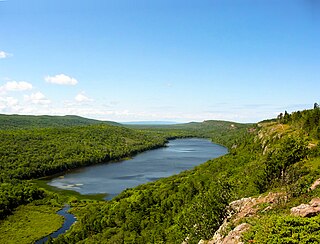
This memory of mine does not take place at Lake of the Clouds, pictured above. That lake is some miles west, in the Porkies.
The point of fishing is rarely ever about the fish themselves. Granted, the taste of pan-fish in the fryer after a long day is enough for me to toy with remaining north of the Bridge for the rest of my days. Expansive, clean, clear woodlands lie in the U.P., constantly calling to trolls such as myself.
One of many chances I've been given to explore the exquisite north was during high school, on a fishing trip with a good friend of mine and his father. Outside of traveling and camping with my family I hadn't spent much time with friends or classmates on trips. The feeling of being invited was fantastic in itself, pristine location notwithstanding.
Typically, when traveling long distances, my constant companion was the Gameboy Advance--an electronic siren. Our drive through the lower peninsula consisted of copious amounts of Advance Wars 2 and Super Smash Bros. thanks to a robust cigarette lighter. This combo got us through much of the nondescript farmland in mid-Michigan. Until you get roundabout Cadillac, there's not much special to observe on the interstate, but boy-o does it increase in majesty northwards. There is something magical about the drive up north. I've done it with many people over the years: family and friends, during the summer, winter and spring, but each time it feels like I'm going back to a place of special belonging, where more exists than can be observed. The unseen is the history and lore, the French, Natives and British, our family's camping over twenty years, the experiences that pile high and anew, during each unique foray...and the Gameboy.
The energy, building in the aether, climaxes at a very specific point, some miles south of the peninsular apex. Necks crane, non-driving activity stops and eyes strain to behold the sight of sights. We've been trained over the years for one task alone--to see the Bridge first. I have it down to which overpass I need to start paying attention at, and wait patiently for this concrete signpost to show me the way to victory. It rarely fails (provided you remember which overpass it is). I remember craning to see the bridge on this particular trip and being overzealous in my prediction of when it would appear. So anxious to show that I knew the area well, I fell flat on my face. The feeling faded quickly though, because while I was wrong, we were still on the way north.
We passed through the city fairly quickly, stopping briefly for some KFC, before our passage over the deep-emerald, diamond encrusted waters that are the Straits. The shoreline is rocky and sandy, beige in color--clean and transparent, sand covered over completely by myriad stones. It deepens near the first tower, changing from jade to malachite and back again, passing over the span, beneath which barges and freighters travel on their watery highway.
The land rises quickly into St. Ignace proper, the last bastion of civilization and ubiquitous fast-food, before the vast nothing, dotted by towns named after French explorers, missionaries and colonialists. Mere minutes on the road and the city is left behind, miles of pine bordered highway ahead to gaze at, and wildlife to scan for. The trees rise as sentinels along the road, home to bird nests and cover for deer to bed under during the heat of the afternoon.
Once you're in the U.P. and driving along, the miles tend to look alike, and you drive along very, very straight stretches of concrete. The car sets a constant, ceaseless beat as the tires pass over each separate segment of road. There's very little to cause the road to bend along its trajectory. The occasional lake and pond will cause some deviation, but little else is in the way of whatever destination you might have in mind. And it's flat. Until you meet the Porcupine Mountains in the west, you might confuse the U.P. for a Nebraska, producing large Christmas trees instead of corn and grains.
Towns (more properly villages) dot the road, appearing just when you think you had already passed the last bit of tamed land in the world an hour ago. Many are merely collections of hunting and fishing cabins, but true Yoopers you will find in and among those who call civilization in the south home.
We walked into a tiny diner in town to "pay da Yooper who mows da lawn in da summer, before headin' to da house, eh?". My friend's dad asked to whom he owed money, and the whole diner lit up, each man there making the same claim to the money. There were no women if I remember correctly. Yooper women are like the Entwives, they cannot be found.
We could have been doing anything at all in the U.P. for those few days. It so happens that of fishing, hiking, disc golfing, biking, swimming, canoeing or any of a host of pursuits common to the area in the summer, we had chosen to fish. Fishing, of the sort we did, consisted of sitting in a boat on a beautiful lake all day (often falling asleep), in the sun and in the shade, waiting for bluegill, bass and other sun/panfish to happen upon our lines. We would routinely bring in 15-30 fish per outing, from the littler lakes, and have delicious fried supper of them at night. I can't underscore enough how delicious some fresh perch, bluegill and bass taste, after you've spent the day catching them on an inland lake in the U.P. with tall pines rising up next to you on shore, and a fresh breeze cooling your sweat covered face on a sunny afternoon.
The spruce, jack and white pines unfurl their spiny umbrellas and carpet the ground with prickly rust that feels soft beneath your feet. It's carpet for a king and queen and whole court of woodland creatures.
The big lake has fish in abundance as well, and different customs by which she's approached and fished in. We go north to Superior for the day to catch walleye in a bay near the Keweenaw peninsula. Walleye are a completely different animal from the small panfish we were hunting before. They're larger and live nearer the bottom, in deep water. Not caught merely by dropping down a line and hoping they'll see it, we troll for them. Our boat constantly, slowly, smoothly moves, back and forth across the water. The surface is grey, like the clouds above. The overcast sky is welcome to burned skin, though the life preservers still chafe, even over shirted backs. Our lines go deep, weighted by a variety of sinkers in all sizes and shapes, to keep the thin translucent cord in the deep water. Again, I fall asleep. At the time I'm a little ashamed to be falling asleep, but my future self wishes to be back there, asleep in the boat, floating on one of the greatest lakes, without a care.
My friend catches a walleye that day. It's exciting! The fish is much greater in size and feisty on the line. It took a few tense minutes of fighting and clever line work to reel in and must have been 5 feet long! The aquatic craniate's will is not honored that day and we pull it into the net alongside the boat...success! (In addition to the success that having the time to spend fishing for fun already is.) We spend hours out on the water, but have only one big hit, one dose of excitement to punctuate the wonderful monotony. His dad later filets the finned beast to freeze at home for delectable winter meals.
After a few days, our time north comes to a close and we must leave. We must go back to our lives and our jobs, the suburbs and the cities, the cars and the noise. However, no matter how far south one may go, the North, her fish, her timber and her lakes ceaselessly beckon.
Wednesday, June 19, 2013
We were never millwrights
The sun's rays penetrate the oak's boughs into the glade, and play gently with the pine needles carpeting the ground. Their edges gleam dully as though they are tiny chipmunk foils. My brown leather boots, scarred by close calls with saws and hammers, brush aside leaves from past autumns now forgotten. They scuff the dirt, pushing aside soil transplanted here from receding glaciers.
Yellow-green leaves look down on me, batted about gently by the breeze, waving as though we were best friends. The land here lives and breathes the stories of forgotten men and women. It has lungs but no tongue, leaving me with the sense of great untold history. The loam tugs at the strings holding the purse of history, tied tightly by men too afraid to share.
I feel a connection to the wide sweeps of timber before me, harsh mistresses that have no ties to the soft middle class boy, naïvely tramping about. Don't regale me with tales of your camping, the living you do in the luxury of your warm portable houses, pulled about by monstrous machines.
The stones can tell you stories of men and women camping for months in the deep snows relying on naught but layers of birch bark and thatch. You reside here now, but it was not your hand that tamed the land. Your ancestors were not even here to see the timbers fall and industries rise from grassy fields.
Take my admonitions gently, coos the Old Mother. The trees spreading their limbs are for you to take shade from and rest beneath. I ask only that you think of, and remember, your place. Remember those before you and think of those that will come after. You all rest on my bosom.
Monday, May 13, 2013
Sloats and Frains: Preface
I'm playing with the idea of releasing this as a series of vignettes; I want to write it as a reflection and anecdotal account, in addition to the more thorough account I wrote while in Europe.
Preface
Slow boats and fast trains hold the key to my heart. The two mark a time in my life when I didn't have to be somewhere punctually, mostly, and when I could savor moments spent with scenery and thoughts. A summer counting car rides on one hand, and writing a book with train ticket stubs. A new pair of sneakers stepped off the plane into a Mercedes wagon in May and left dilapidated and broken, by train to the airport in August.
MittelrheinBahn is my favorite. It snakes from the Mainz main station, along the glittering Rhein, bends north past Bingen am Rhein at the Knee, up through Koblenz and Bonn, to Köln. Little castles dot the landscape, some sit in the middle of the river--having taken ancient tolls they now smile with age upon the young generations passing by. The slopes above the Rhein are home to expansive vineyards, providing the leaves with a second dose of sun, reflecting off the water. It was this stretch of land that I explored, with two compatriots, most thoroughly in Rheinland-Pfalz during the South-African-World-cup summer of 2010.
I was joined by fellow foreigners, tourists, business people, drunk soccer fans, school-children and families on trips near and far, now scattered to the corners of the globe. That summer changed me. I became more independent, confident and added a language to the bag of things that nothing but time can strip from me (at this point I would like to apologize to everyone that didn't want to hear stories from "when I was abroad" because that can be ever so annoying). I was given time to connect with my ancestral roots and meet distant relatives in the Fatherlands. Summer dripped gold over the sheep speckled hills, chemical reaction mixtures and crumbling castles.
This was inspired by #93 on this post from red Ravine.
Preface
Slow boats and fast trains hold the key to my heart. The two mark a time in my life when I didn't have to be somewhere punctually, mostly, and when I could savor moments spent with scenery and thoughts. A summer counting car rides on one hand, and writing a book with train ticket stubs. A new pair of sneakers stepped off the plane into a Mercedes wagon in May and left dilapidated and broken, by train to the airport in August.
MittelrheinBahn is my favorite. It snakes from the Mainz main station, along the glittering Rhein, bends north past Bingen am Rhein at the Knee, up through Koblenz and Bonn, to Köln. Little castles dot the landscape, some sit in the middle of the river--having taken ancient tolls they now smile with age upon the young generations passing by. The slopes above the Rhein are home to expansive vineyards, providing the leaves with a second dose of sun, reflecting off the water. It was this stretch of land that I explored, with two compatriots, most thoroughly in Rheinland-Pfalz during the South-African-World-cup summer of 2010.
I was joined by fellow foreigners, tourists, business people, drunk soccer fans, school-children and families on trips near and far, now scattered to the corners of the globe. That summer changed me. I became more independent, confident and added a language to the bag of things that nothing but time can strip from me (at this point I would like to apologize to everyone that didn't want to hear stories from "when I was abroad" because that can be ever so annoying). I was given time to connect with my ancestral roots and meet distant relatives in the Fatherlands. Summer dripped gold over the sheep speckled hills, chemical reaction mixtures and crumbling castles.
This was inspired by #93 on this post from red Ravine.
Monday, April 01, 2013
That's Mr. Prosaic Confabulation to you...
A good friend told me about how excited she was to teach college students the next unit in her writing course: memoir. Her students write about their favorite memory in as much detail and nuance as they can. Their stories pop with detail, bubble over with spicy particulars and sizzle with meaning when she's through.
It got me thinking about some of my favorite memories, one of which is completely fabricated. I'm not delusional about this memory--I know it never happened, but it feels as real as if it had. In fact, it seems more real than some memories which actually happened. Brains are so funny sometimes.
This memory is about time with my grandfather at my grandparents house, bordered by a small crick in the back yard. There's an old, rusting, wrought iron and cement bridge which crumbles at the edges in places and spans a very shallow sandy bed no more than 10 feet wide. Neighborhood kids have taken a dirt path to the bridge and crossed to school for generations. It's very unassuming, with simple chain links running along its profile, room enough for two children to pass, perhaps. Growing up, the boy cousins made boats from sticks and leaves to drop from the bridge and race until the end of the property, a mere 50 feet downstream.
One day when my little brother and I stay with my grandparents for the day, while our mum is at work, we decide to make boats with Grandpa. It means we get to go downstairs and work with him in his shop. Grandpa's shop had nearly everything in it. This is by virtue of the fact that a good dutchman throws away nothing if it can be of some use later, real or imagined. Waste not, want not, he always says. The dark side of this is his pickle "juice" drinking habit, balanced by the beautiful grandfather clocks my aunts and uncles all sport in their houses, which he constructed from kits he saved from dumpsters over the years. Grandpa's shop also has Werther's candies.
The boats we make are simple and flat, made in a boat-shape of course, with little keels on the bottom. We sand them down together and Grandpa helps us glue the keels to them. With the keels attached, we're faced with a decision, sail the boats now in the sofly burbling crick, or paint them and wait for them to be christened. Funnily enough, in the part of the memory that transpired in real life, I don't remember who made the decision, but we paint them. Mine is painted red and black; the little bro chooses blue with red. He writes our initials on them of course. That way they match every other item in our toy chest back home.
The painting was the point at which events passed from fact into the realm of fiction, constructed from desires in a child's mind. I don't know at which point the following became entrenched in my memory, vivid as the sun on the dull red brick outside my window, but my tangled mess of neurons holds onto it tenaciously and naïvely.
In my memory, we take our painted boats to the back yard instead of piling into our old and worn, red minivan. We drop the boats in the crick with Grandpa and walk along the bank through neighbors' backyards as the boats slowly drift along the current. The sun shines through the pine trees leaving dappled patterns on the brown, soggy leaves that are left in the spring after the snows finally melt. The afternoon feels golden, lit like the artificial set of a movie. My little brother isn't even part of the memory at this point, poor fellow. In fact, no boats float in the stream, we just walk. It ends there--my Grandpa and me, strolling along the bank. A simple pleasant memory.
The detail about the lighting is probably what tipped me off initially about the falsity of the memory. That and the speed of the crick. In the spring, the crick becomes a creek, moving swiftly and bone-chillingly from the snows dripping in; wade after boats at the peril of your warm tootsies.
Though it's fraught with errors and inconsistencies, I treasure this memory of my Grandpa. This is the memory I wanted to have with him. I wanted it so much that in my mind, it happened.
I shelve it in my brain along with the real memories of my Grandpa. It sits next to us fishing for catfish with my cousins on the side of a channel (We ate those terrible, bottom-feeding fish later. Boiled. I didn't have fish for years because of this.), sits next to camping trips with him listening to Rush on a picnic table with kids cavorting loudly around him, next to uncles and aunts skiing behind us in his ancient, rickety, underpowered fishing boat, next to Sunday afternoons eating pot roast, green bean casserole and mashed potatoes, and hearing him pray for the "lost and sorr'ing (sorrowing) ones".
I don't know why I fabricated this memory, or even if it was on purpose. I'm going to leave it there though, because if I had asked him to, Grandpa would have walked that crick for miles with me.
It got me thinking about some of my favorite memories, one of which is completely fabricated. I'm not delusional about this memory--I know it never happened, but it feels as real as if it had. In fact, it seems more real than some memories which actually happened. Brains are so funny sometimes.
This memory is about time with my grandfather at my grandparents house, bordered by a small crick in the back yard. There's an old, rusting, wrought iron and cement bridge which crumbles at the edges in places and spans a very shallow sandy bed no more than 10 feet wide. Neighborhood kids have taken a dirt path to the bridge and crossed to school for generations. It's very unassuming, with simple chain links running along its profile, room enough for two children to pass, perhaps. Growing up, the boy cousins made boats from sticks and leaves to drop from the bridge and race until the end of the property, a mere 50 feet downstream.
One day when my little brother and I stay with my grandparents for the day, while our mum is at work, we decide to make boats with Grandpa. It means we get to go downstairs and work with him in his shop. Grandpa's shop had nearly everything in it. This is by virtue of the fact that a good dutchman throws away nothing if it can be of some use later, real or imagined. Waste not, want not, he always says. The dark side of this is his pickle "juice" drinking habit, balanced by the beautiful grandfather clocks my aunts and uncles all sport in their houses, which he constructed from kits he saved from dumpsters over the years. Grandpa's shop also has Werther's candies.
The boats we make are simple and flat, made in a boat-shape of course, with little keels on the bottom. We sand them down together and Grandpa helps us glue the keels to them. With the keels attached, we're faced with a decision, sail the boats now in the sofly burbling crick, or paint them and wait for them to be christened. Funnily enough, in the part of the memory that transpired in real life, I don't remember who made the decision, but we paint them. Mine is painted red and black; the little bro chooses blue with red. He writes our initials on them of course. That way they match every other item in our toy chest back home.
The painting was the point at which events passed from fact into the realm of fiction, constructed from desires in a child's mind. I don't know at which point the following became entrenched in my memory, vivid as the sun on the dull red brick outside my window, but my tangled mess of neurons holds onto it tenaciously and naïvely.
In my memory, we take our painted boats to the back yard instead of piling into our old and worn, red minivan. We drop the boats in the crick with Grandpa and walk along the bank through neighbors' backyards as the boats slowly drift along the current. The sun shines through the pine trees leaving dappled patterns on the brown, soggy leaves that are left in the spring after the snows finally melt. The afternoon feels golden, lit like the artificial set of a movie. My little brother isn't even part of the memory at this point, poor fellow. In fact, no boats float in the stream, we just walk. It ends there--my Grandpa and me, strolling along the bank. A simple pleasant memory.
The detail about the lighting is probably what tipped me off initially about the falsity of the memory. That and the speed of the crick. In the spring, the crick becomes a creek, moving swiftly and bone-chillingly from the snows dripping in; wade after boats at the peril of your warm tootsies.
Though it's fraught with errors and inconsistencies, I treasure this memory of my Grandpa. This is the memory I wanted to have with him. I wanted it so much that in my mind, it happened.
I shelve it in my brain along with the real memories of my Grandpa. It sits next to us fishing for catfish with my cousins on the side of a channel (We ate those terrible, bottom-feeding fish later. Boiled. I didn't have fish for years because of this.), sits next to camping trips with him listening to Rush on a picnic table with kids cavorting loudly around him, next to uncles and aunts skiing behind us in his ancient, rickety, underpowered fishing boat, next to Sunday afternoons eating pot roast, green bean casserole and mashed potatoes, and hearing him pray for the "lost and sorr'ing (sorrowing) ones".
I don't know why I fabricated this memory, or even if it was on purpose. I'm going to leave it there though, because if I had asked him to, Grandpa would have walked that crick for miles with me.
Thursday, September 04, 2008
The Shrew: A midnight adventure
Chase begins a few moments before the witching hour when small furry creature falls out of rumpled up shirt. Both are confused...creature by light, human by creature. They freeze, wondering where light, animal came from. Vermin makes first move and scurries from view, human traps vermin in shirt, still confused. The rodent decides that it has spent enough time on the bathroom floor and scurries into the room of the aforementioned, utterly confused biped. The little ball of fur floors it into the carpeted bedroom and dives into a stack of linens. Human begins taking apart pile intent on capture...but he cannot find the stealthy varmint. This is when, quarry lost, all good hunters do the same thing, they find the master tracker...father. Upon waking and learning of the sorex araneus problem, the veteran grabs his weaponry: dinner plate and coolwhip containers. After an arduous night time search under furniture and other floorbound items, the hunt is nearly called off, until the rookie notices the quarry innocently pondering its existence in the corner of the room where it first entered. Suddenly the furrball is backed into another corner, bolts left, bolts right, dodges the artistry of the skilled, and finds itself back into the well lit water closet. This is his final hour, as the dutch tupperware is tossed through the air, received and promptly slammed down on the crafty vermin. Success, plate slides under trap, guaranteeing the capture of the silly little beast. Minutes later, shrew meets pavement at 25 miles per hour. Goodbye cruel world.
Monday, June 23, 2008
Hope Exists
I forgot in my previous post, about a bit of the story from Cincy. During the course of our visit, Marquis and Marquisha's grandma showed me pictures and trophies that her son had won. He was their inspiration as a football player, son and relative that made it past the poverty. They had hope in him, that he could make it past the wretchedness of their situation and fulfill his potential. I just pray that someday they'll hope/trust in the God that loves them and can provide their every need.
Sunday, June 22, 2008
Cincinnati
This week, my high school youth group went down to Cincinnati, Ohio for a mission trip. I went down this year for the first time as a sort-of leader because I'm out of high school. Although it was hardly my first time (fifth?), God found a way to break my heart. One day during the week, I helped bring two of the kids, Marquis and Marquisha, home after day camp. When we arrived at the place where they lived and began walking up the trash filled, broken down, splintered stairs up to the apartment they inhabited with their mother and grandparents, I tried to prepare myself for what we would find. Nothing could...in their home there was a wall of overflowing trash bags against one wall of their kitchen area. Their grandparents welcomed us in and talked with us while their mother filled out forms allowing them to attend the day camp. As I talked politics with the grandfather it just filled me with sadness at how these children lived, taken care of by adults who filled their lives with addiction to drugs and alcohol, little time with adults that show they care. The children live in absolute squalor, relying on electricity from an extension cord on the first floor because they can't afford the monthly bill. I go back to my home to electricity, water, food, parents that aren't taking hits, and am able to write about it on my computer to essentially myself. It's so hard to write this, knowing that I'm reaching an audience of zero, and that while I'm writing, they're probably hungry and feeling unloved. Marquis, Marquisha...you are loved. I'm sorry.
Subscribe to:
Posts (Atom)