I like functions, so after some thinking during Bible study a couple weeks ago, I came up with the above plot in Mathematica.
The Pharisees (a case study for humanity?) have years of Jewish history and culture framing their interpretation of what God, through the Law, called them to.
Jesus came and said, your initial conditions are right, but the human function caused a deviation from what God says the law means. He said that he was fulfilling the Law--pointing us again to closer communion with God.
We've had 2000 years from another set of conditions.
Maybe the church set a nice linear function for how we think about God, from the Law to Jesus, but we only ever had two points (arguably the Torah and Jesus' life--special revelation--though I don't mean to minimize general revelation, which I tend to celebrate as a scientist).
Sometime it feels like we're/(I'm) the Pharisees approximating God's higher order polynomial (or periodic, transcendental functions) with linear thinking and living. I usually find it's best to give up control over where we think God's Will is headed (because invariably I'm wrong or pigheaded), and recognize that Jesus told us to surrender our will.
I was reading Jesus' words in Matthew 19 about divorce and marriage for Bible study this week.
The disciples essentially ask, 'if divorce is not permissible, is it better not to marry at all?'
Jesus then makes a very wise point about approaching the marriage relationship. At first I thought he was making a value judgment, saying that if you can accept not marrying then you should--it's better to serve the kingdom than to marry.
However, I don't think this is the case. In verses 11 and 12, Jesus is saying that each person should be honest with themselves and discern if they are committed to marry or not, and if not, then make the decision to accept that.
This fits with the be fruitful and increase in number command from Genesis, but leaves a wide space for single people working for the kingdom. In a patriarchal society then, and now, this is counter-cultural. It liberates women (and men) from living within the framework of having value only when attached to a man (or woman).
It also puts the onus on Christians to consider carefully if they are committed to marriage.
Among believers this should be convicting--divorce rates are as high among Christians as non-Christians. Perhaps we do not properly consider the commitment as Jesus stated it. Perhaps we have been swayed by a cultural expectation and by patriarchy.
As a single person, I have no experience from the side of marriage--just my dating history. However, I can still see from this side that Jesus is emphasizing commitment in the marriage relationship. I have felt the pain of a breakup for just this reason.
Countless examples of family's and friends' marriages show that love in marriage is not easy. This truly underscores how critically important it is to understand that sort of love and what you are deciding to do when entering into marriage. The 'in sickness and health', 'hard times and easy times' phrases may be the most important in the vows that are commonly used.
I support financial reparations and an official apology for the descendants of African slaves in America.
Here's why.
1) Significant American prosperity was attained from African slave work in captivity.
2) Programs like the New and Fair Deals were heavily bent by southern Democrats (in absence of a Republican party to let the South more effectively answer 'the Negro question') to exclude blacks from much needed assistance.
3) Their exclusion from significant federal programs to address the Great Depression and subsequent expansion via the Fair Deal was at the hands of local administrators, and the southern Democrats in Congress--because of these inequities, based in racism, that dramatically reduced significant aid to many Americans, I believe that descendants of black slaves are owed a significant, radical redistribution of wealth.
Now, I just used those numbers to get a handle on the order of magnitude (using recent government expenditures on a significant program), but it shows that this is a possible thing to accomplish. I don't know if that number is appropriate, or how it would be disbursed to ensure that the right people get it, but the number is manageable, and would do significant good. In all likelihood, the largest hurdle will be to administer such a program fairly and to those with agreed upon criteria.
The criteria and their application will not be a trivial matter to come to an agreement on. Much of the time reparations are dismissed immediately by white folks (see statistics in Darity paper, link below). Maybe the thing seems unmanageable or too difficult to do properly, but I think that's garbage. There is historical "evidence" and reason to make financial reparations and based on my (extremely) rough calculation, financial ability. ---- I've been reading "When Affirmative Action Was White" by Ira Katznelson, a Columbia professor of political science and history. Premises 2) and 3) are based on this book. I highly recommend it. Additionally, an academic paper, "Forty Acres and a Mule in the 21st Century,"written by William Darity at Duke. Note: he messes up the math pretty hard when he divides 1.3 Trillion by 30 Million to get 'slightly more than 400,000 per recipient' instead of 43,000 per recipient, but the point still stands. And my math is pretty close to estimates that he and other historians have come to! *pats self on back*
Our minds are strange places--mine is no exception. A favorite activity of mine is to find and make non-sequiturs or just do things that are inexplicable.
To that end, I made two shorts that are a little inexplicable in their existence--the joke is really that I made them.
The first one is from a year and a half ago. I was bored in my parents' house, waiting to start work after grad school, and had time, so I spent it filming stuff around the house. I was telling my friend Mark (formidable film maker/cinematographer/director/sound recorder) about the project and figuring out where I would take it. We were taking video of a solar eclipse at the time, so I had the audio of our discussion of it. I ended up taking that audio and using it for the film. In all, this is the result of work spanning about a month of video taking and editing.
The idea was very meta, and context/theme-less, which is why I thought it was funny. Like I say in the film--it's not good.
3711: a tongue-in-cheek sensory collision
A second film in that vein is the one I made most recently. Its premise is, 'what if I made a movie about the transition scenes that always get cut from films?'--the in-between parts that don't contribute to the story. I made it over the course of a few hours in two days. This is that:
Getting Up (short)
Then there are the ones that I care about. The projects that have actual meaning to me.
My Grandpa Split made a bunch of clocks for my aunts and uncle. I wanted to get him on video telling it, because he loved to spend time with us, and he loved to make clocks, and he also loved to tell us about them and make sure that we were caring for them.
This is his story about that process (there is an extended cut with some more too):
Grandpa's Grandfather Clocks
A second one that is important to me is the engagement of my best friend Cam to his now-wife Kate. I already wrote about it.
The Proposal
I was still kind of learning the D7000 at the time, but I'm pretty pleased with how it turned out, given my dearth of experience in these matters. The moment was chronicled, and I really hope that they are happy with it, because they're amazing and mean a lot to me.
Next: a comedic/educational short with the premise: 'what is your favorite shape?'
I've had the course evaluations for a couple weeks now. I skimmed them briefly, but only today took the time to summarize them for myself to make sense of how I'm going to proceed into the spring semester (I'm teaching the same course).
Taken with sufficient grains of salt, the student criticisms were enormously helpful.
Unsurprisingly, the course practices that helped the students most were, in order:
1) Homework
2) Problems worked in class
3) Textbook
4) Power Point slides
5) Lecture
Well, that was humbling, to be sure. And again, not unexpected.
The summary of student comments on how I can improve:
Write larger/neater
Be more organized
Engage class more with examples
Don't just read off the PowerPoint slides; address concepts better
These were the best takeaways for me.
How was I distracting as a person? How did I get in the way of the material and their understanding of it?
I am going back and forth about posting these here, for anyone to read, but for the sake of confronting my weaknesses, and baring my failures, here they will stay.
In general, they found the intellectual challenge of the course to be overwhelmingly higher/much higher, and that much more was expected of them compared to other courses.
They also said they learned more, and that it was more important to them than the average course.
One final cut came when they said that, though the course was (perfectly symmetrical distribution) 'good' on the whole, 3 out of a 5 pt scale--the effectiveness of the instructor's teaching methods was only 2.66/5 on a 5 pt scale. I was closer to 'good' than 'fair,' but barely. Ouch. Point taken.
The brightest spot in the evaluations for me came in their tremendous support of the devotions I did every Thursday. That made me feel really good, and want to work so much harder on making the rest of the course better.
Class starts again on Tuesday next week. Here's to massive improvement.
When I first took interest in astrophotography, many folks on forums suggested shooting in RAW. I did for one outing, and never used it for post-processing (which is the whole point), then abandoned it to continue shooting jpeg.
Well, to improve my game, I decided to try and learn about post-processing again. I always viewed it as cheating (for no good reason, just because I didn't understand it), but I know most people who are serious about their photography do it, so it can't be that bad, right?
My friend Lindsay is an amazing wedding photographer (shout out if you're reading this!), and I know she spends a lot of time editing her work, so that inspired me to look into it--maybe I could give my Milky Way photos some pop.
Not every program can handle RAW images, or the Nikon specific NEF format. With that in mind, I started using ViewNX2 from Nikon--free software that came with my D7000. It's not meant for heavy editing, but you have some reasonable capabilities with it. I also followed a couple tutorials that used Lightroom to get started for ideas.
Since most of the images that I'm proud of are in jpeg format, I didn't have much to work with as far as testing goes. I did have one image though. It's one that I'm actually really happy with, that I took on Mackinac Island just after grad school. I've already written about it on the blog here--I love the blue hues and the location even more. I didn't think I'd be able to improve upon it much, but I gave it a try anyway.
Here is the original unedited image:
And after taking some time to edit:
I think the greatest change was in the white balance. I'm not altogether sure if I got it right though. The second image seems truer to life, and the colors pop more (particularly the lichen covered harbor wall). I'll play more, and maybe change my mind...
As happy as I was with the first image, taking a few minutes to tweak the image in ViewNX2 made a huge difference, and I love it.
Even though VNX2 is limited in its capabilities, for my purposes it is great for editing. My "workflow," if you can call it that, is simple and I don't do any batch processing. There may be a time when I'm ready to jump to Lightroom and use Adobe's $9.99/month 'Photography' package, but not yet--not until I learn enough to actually need (want) it.
One concrete result of this experiment is that I'm shooting in both RAW and jpeg from now on--my D7000 has dual slots, so I can have the convenience & compatibility of jpeg and the flexibility & endless possibilities of RAW--I shall have and eat this cake.
In a matter of months, I lost both of my surviving grandparents.
One of them I thought would live forever--he just seemed to be constructed of vitality and life. The other was a timeless fighter, and she fought to the end before collapsing exhausted into Jesus' arms, ready to see her husband.
In November I grieved for my Grandpa Split, went through the visitation and funeral, and felt a chapter close with that sacred process. It was the same way when my Grandma Split passed away almost three years ago.
This time something is different. To be sure, each side of my family is distinct in Stimmung (mood, disposition), but there is also a level of routine now. I expect that to an extent this is natural--we all grieve more people and more frequently as we age. But I think it's more than that.
It feels too soon. There is almost a mechanical sense to how I'm approaching visitation, the funeral, and even my internal grieving process. I do not like it.
I guess that's ok. There is much in life that's not meant to be liked or disliked.
Growing up, I was fortunate to spend a lot of time with Grandma. She was THE baby sitter.
I remember the beautiful old brown toy box in the den with green carpet and all the photo albums. We used to go to her house for Sunday dinners with the whole family when I was little--playing with plastic balls and bats in her yard after lunch. I remember the constant supply of lemon drops in her refrigerator, for you see, Grandma had a sweet tooth.
Since we lived close, Jeff and I spent a lot of time in her yard making exorbitant sums mowing her lawn, picking up sticks and caring for her well-tended flower garden when she couldn't do it herself anymore--$5 was generous!
Grandma raised a family and lived in that house with green canopies and shutters for as long as the block has been there. She was a fixture, and could hardly bear to leave when it became clear that she needed more care--that was her stubbornness.
When I think about who Grandma is as a person though, I don't think about the delicious butterscotch pies she made, or the tomatoes she would eat with sugar, or the myriad gifts she loved to provide her children, grandchildren and great grandchildren, or even the way she talked about Grandpa. What comes to mind is how Grandma prayed for and remembered and wrote her family all the time. Even last week, she asked with concern, if I had gotten the card she sent me for my birthday. I don't doubt that we were constantly on her mind.
There was also the way she worried, which I inherited from her in spades. Worry for family. Worry for our well-being, happiness and health. Worry and thought were some of the ways she knew to show love. I know from her eagerness to sit with us and hear about what was new in our lives that each of us had a place in her heart.
I think of that quiet consistency as one of her most salient qualities.
I'm not sure how heaven works. I don't know what she thinks about or how her memory works now--but I'm sure that now her love is free of worry and that it's full for us.
I have a sinus infection. I spent today in my room nearly exclusively. Two rather unfortunate statements. In order to assuage my boredom and ennui, I took to re-imagining the banality of my room using my camera and some natural light--high and low.
Taken 12/29/14 at 12:09PM EST F-stop: f/4 Exposure time: 1/1250 seconds ISO: 6400 Auto white balance, auto ISO with Nikon D7000 body and Nikon 35mm f/1.8G AF-S DX Lens I love to experiment with depth of field. This is just a tuner and capo on my mousepad. I kept the aperture stopped down somewhat to shrink the field of view and had plenty of light, so I could get away with a higher shutter speed and high ISO.
Taken 12/29/14 at 12:14PM EST F-stop: f/4.5 Exposure time: 1/2500 seconds ISO: 3600 Auto white balance, auto ISO with Nikon D7000 body and Nikon 35mm f/1.8G AF-S DX Lens Over time some bubbles formed on the inside of my glass of water--a thin enough layer that even the curvature of the glass renders some of them out of focus at f/4.5. I had plenty of light to work with here as well.
Taken 12/29/14 at 3:18PM EST F-stop: f/4.5 Exposure time: 1/250 seconds ISO: 6400 Auto white balance, auto ISO with Nikon D7000 body and Nikon 35mm f/1.8G AF-S DX Lens Here I put three objects in order (the second is pretty dusty), and used approximately the same depth of field as the previous two images. My desk was getting boring, so...to a bookshelf for this one. The painting is from a local Ludington painter. My Grandpa and Grandma Split had it in their home.
Taken 12/29/14 at 6:43PM EST F-stop: f/1.8 Exposure time: 1/80 seconds ISO: 6400 Auto white balance, auto ISO with Nikon D7000 body and Nikon 35mm f/1.8G AF-S DX Lens I stopped down to f/1.8 for this one on account of low light. The vantage point is from my desk into my neighbor's backyard. There is a little bit of orange light from across the street that gets blurred through the screen. Of the series of shutter speeds and apertures I took, this most accurately described the mood of my room at the time.
I took some time to list (with videos and lyrics) the songs I used for devotions on Thursday before class this fall. For most of them I talked about what they mean to me as a Christian, and why I think they're important themes for Christians to engage with. Sometimes I asked questions and got answers, sometimes I asked questions and got silence--both were great responses.
Him--Lily Allen
I asked students what they thought the song meant. Who is it written to? A lover, God, Christians, non-Christians? Do you think that God has a different morality than humans? Do you find the personification of God in the song to be interesting, horrifiying, enlightening?
I don't have answers, but I think the song raises some great, provocative and interesting questions about human meaning and context.
[Youtube, Lyrics]
Ghetto Gospel--2Pac
Why don't we sing songs like this in church? How does this compare to a worship song you would sing in church? How does the 'ghetto gospel' compare to the 'New Testament gospel'?
[Youtube, Lyrics]
Jesus Walks--Kanye West
I love the visual themes in this music video. The first one was produced and funded by a record label, but Kanye wasn't happy with it, so he funded this one himself.
It's pretty remarkable how well this song did on the popular charts. Do you think a song like this could do well today? Why, why not?
I don't completely agree with Kanye's theology in terms of grace and redemption lyrically, but visually it is a stunning piece.
[Youtube, Lyrics]
I Still Haven't Found What I'm Looking For--U2
It's essentially a song of lament. A type of psalm perhaps--a song of longing. This is basically the reality of life for most of us. Christians to an extent have found what we're looking for, but cannot experience God outside of our frail human senses.
I love the biblical imagery in the song: speaking with the tongue of angels, holding the devil's warm hand, kingdom come, broken bonds, loosed chains, cross of shame.
[Youtube, Lyrics]
Life & Love & Why--Switchfoot
L&L&W is from one of Switchfoot's earlier albums--it was one of my favorites (the Legend of Chin was often on repeat in my room while I read).
It seems very like Ecclesiastes to me at first blush--meaning of life stuff.
My simple answer to these questions is this: the sacrifice of Christ is utterly compelling--it is singular in selflessness and purpose.
[Youtube, Lyrics]
I Don't Know--Dredg
An agnostic's prayer of sorts. I've written about it here already.
The "moments of awakening" and blanket of "the warmth of ignorance" illustrate our human struggle to interact with the divine.
Someone on a message board (Qohelet) had a delightful perspective:
although the "it" may mean more than one thing. It is interesting that
we communicate as if a possible-god is obligated to guarantee us
anything, as if such a being is on trial by us instead of vice versa.
Speaking agnostically, if there really was some ultimate, all-knowing
being able to guarantee us longevity, a special place, etc., would it be
more realistic to suppose that he must prove himself to us or that we
must prove ourselves to him? If the latter, then we may well be in a
state without all the answers so that this possible-god can assess what
we are really interested in finding out / becoming.
Shall Never Lose Its Power--La Dispute
From the perspective of a person/people who lost their faith and became cynical about it.
Imagery like the lion can be very comforting or horrifying depending on what perspective you have (the last lines: feeling belonging is great when you're on the inside, but the separation can be painful--tangled intruders).
My friend Mike's story: when shunned by Christians and family for being an atheist.
Clearly there's a lot of pain in this song, due to the departure:
hands tied to the tracks and left
brick to the back of your head
whining turns to wonder turns to ice
...Christianity feels like a fence.
This is why it's so important to talk about issues of doubt and the grey areas--we can hurt people on purpose or not, if we don't listen--that goes for any experience. People and their doubts deserve to be heard--everyone has a story and legitimate beliefs, even if we don't agree and even if we think that Jesus is the best thing for everyone. We don't get to decide for people.
[Youtube, Lyrics]
Polarize--21 Pilots (suggested by a student)
Instinctively I think, we gravitate toward binary separations--it is generally easier to say a thing is "not" than to describe exactly where it belongs in a taxonomy.
Naturally we observe light and dark, cold and warm, often using these forms to describe our relation to the divine. In this song, Tyler illustrates this pattern in his desire to polarize his life--the mistakes and successes.
But it's not enough to put our actions in bins and weigh them against each other. He doesn't expressly give this as his purpose, other than to be an adversary to the evil he has done (make up in some way).
His redemption begins at 'Domingo en Fuego...' It's the shift that recognizes that binary categorization and work are not in fact redemptive--the redemption arises when "You'll have to come and find me."
As a whole it's an allegory for the Christian life in its realization of grace.
[Youtube, Lyrics]
To Be Alone With You--Sufjan Stevens
I think of this song as the answer to L&L&W by Switchfoot. It's the answer to why I'm a Christian.
[Youtube, Lyrics]
Some Nights--Fun.
Most nights I don't know any more...
I can relate to this. It takes you a while to figure this out.
We find this best during periods of struggle. I found out part of it in college and much more afterwards.
Find the people that help you find who you are--people will want to tell you who you are, but that's for you to decide. You have to make sense internally as a person.
Pursue harebrained ideas and do the hard things, because you can be used in crazy ways.
My own experience in academia was painful, it doesn't have to be, but it was and it lead me to be able to teach you guys, which taught me that I like teaching!
[Youtube, Lyrics]
You Can't Always Get What You Want--the Rolling Stones
Kind of a cliche, but it applies to life and pays homage to God's plan as a similar theme.
There have been a number of things that I thought I wanted: PhD, job in pharmaceutical development managing a lab, etc. but...
what I have now is the opportunity to have an evolving balance in my life, teach, write/play music, lead Young Life, coach Science Olympiad, and have a full time job with the flexibility to be there for friends. It's what I needed, not what I wanted.
[Youtube, Lyrics]
My God--Jethro Tull
In light of shootings, mayhem, terror, racism and sin (lecture days after San Bernardino shooting)...
No matter which side you are on: liberal/conservative, protestant/catholic, etc.-->
God cannot be used nor will he be bent to your justifications--that is no god; that is your desire and blindness of will.
[Youtube, Lyrics]
Clockwork--Blackalicious
MC Gift of Gab and DJ Chief Xcel are obviously at the top/peak of their craft--this track is pristine.
As engineers you'll leave this class and continue to do the same calculations that every other engineer does--how do you do engineering differently than anyone else, secular or Christian? That is something that no one can tell you. You need to figure it out for you.
Values/intention/bridge to the non-technical/how you view it/worship God through your work are a few examples, but it will be different for everyone.
[Youtube, Lyrics]
and we're using ν as the independent variable instead of x, of course, but it's the same format.
[For the curious: P is pressure, R is the gas constant, T is absolute temperature, a and b are constants based on critical properties of the specific gas, and ν is specific volume.]
13/27 of my students know how to solve a cubic function.
That is less than half. You solve cubics in high school. Sometimes you solve them in middle school.
It's not surprising that many people criticize engineers for being out of touch with reality--so many just love to play with equations without thinking about what the equations are, or how they can be used/manipulated.
They are tools, not magic, and need to be treated with respect and that understanding, but not reverence.
During the final, one of my students said to me:
"No one ever taught me to solve an equation like this."
I thought about that. What I said was along the lines of:
If you don't know how to solve it, show me clearly, as far as you can, what you've done, and what you would do.
What I thought was:
No. Someone taught you how to solve a cubic; you've done it many times. You just don't recognize this is an instance of the cubic you know how to solve, because you view this equation as being special, because it is the Van der Waals EOS. It can be manipulated just like any other polynomial that you know.
Then I cried and cried and cried and probably vented to Twitter.
My friends Lauren and Maddie joined in to help keep the beat by playing the tops of a couple of pots with some spoons at YL club this week. IT WAS DELIGHTFUL.
It seems like even though I always practice for the entire week beforehand, there's always something that distracts me when I'm playing in front of kids and causes me to miss a chord, or more. It could be the unnecessary sunglasses, the hilariously mistimed clanging pans, the small print, or really anything else I suppose.
I guess I really don't care, unless the kids don't like it. My philosophy remains:
Look like a fool in front of the kids, if it will contribute to their self-confidence or help them feel like they fit in and belong.
Anyway, it was fun and I found this song in the bumper music on the "Free Beer and Hot Wings Show." It's a really good song. Pretty old. From a British band.
"Airplane Song" by 'the Royal Guardsmen':
Unrelated, but this was the first time I ever just sat down and recorded something that I was ~happy with in the first take.
I was going to do PITUSA by Miley Cyrus on my ukulele for YL club during "Silly Songs with Steve" on Monday. I'm still going to. Last week however, two of my friends (both named Maddie) were talking in deep voices rather hilariously, and that got me thinking about how I might make this song sillier.
Enjoy? That may be impossible. Either way, here it is:
Go out and do. Life is a series of moments where you decide to do or not do things, to be or not be the person that makes sense. How that sense works out comes from how God designed us, or to our collection of genes and environment (I would say the two are not mutually exclusive!).
You are the sum of calculations and feelings that have led you to be exactly where you are right now. This is not some kind of self-help idea--my point is that you get to be exactly who/what you choose.
Some will try to stop you. Society will try to stop you: "You're black, you're a woman, you're poor, you're not 'enough' of this or that."
I just want to encourage the pursuit of harebrained ideas and directions, because frankly right now my life seems like a harebrained idea, and I love it. It's exactly what I want it to be. My people love me and I love them. I get to do things that give me life, and watch my friends and family do the things that give them life as well.
Take care of the big ideas and take care of the small details--your life is both.
And if it's not working out, good, I know the feeling. Here's a pic that didn't work out: I took a bunch of un-flattering photos of myself just after I woke up, for the period of a week last year. Enjoy.
Nothing made sense then. It's not always going to. Go out and do.
I remember his firm grasp and smile when he greeted his grandsons--he shook our hands like we were men, even when we were yet boys; I remember him insisting on grizzled face kisses from his granddaughters.
I remember Grandpa for his sounds before and during sleeping, during and after eating, and for the Homeric voicemails he left. Grandpa's style of communication, verbal or otherwise, was unique and unfiltered, much to the consternation or delight of our family.
I learned from Grandpa too--I learned what pickle juice tastes like, and that I don't completely dislike it. I learned the value of saving, and by contrast how important it is to be judicious.
Grandpa lived his life confident in many things. His confidence wasn't arrogant--it displayed the logic and belief in his mind about everything from politics to faith and love. Grandpa's surety could be affirming or it could be maddening, but it was sincere and it came from the same place--even if you didn't agree with him, you could be sure he was being straight with you.
As his grandson, I was always sure that he loved me. He loved doing things with us--making things out of wood, going fishing off docks and in a boat that barely deserves the name. Say what you want about that boat, but it wasn't wasted, and we were never in want of one to use--Grandpa made do with what he had.
There was never a lack of material that couldn't be made up for in work or scrounging. The fruits of that labor stand tall, melodically and well oiled in the homes of his children. Grandpa loved us best through his labors. He knew best how to communicate his love for his family in the works of his hands and his deeds. Grandpa passed that on to his son and daughters and to his grandchildren--his and Grandma's legacy is in our giving and thoughtful hearts. In a family that loves spending time together and doing things with and for each other.
Grandpa and Grandma did it together.
It was the best thing he could do--it's the best thing any of us can do.
I wrote about Grandpa before, here.
And he describes his clocks here:
T: "If you're a white male, heterosexual Christian...you don't stand a chance. Everybody's got it in for you. Everybody's got a cause but us. Everybody's gunning for us."
D: "I think I'm going to be bi...just because."
T: "Every time I see Michelle Obama...I think of 'Planet of the Apes.' She is the spitting image of a gorilla."
[They went on to praise Ben Carson for a while...redemption? I think not.]
The above quotes are upsetting. They are normal to hear. In my office, I hear them. I want to say something that will make the ears on these men burn. Would it matter? What worries me is that it wouldn't. What worries me most is that I won't.
The postdoc I taught with told me once that statistics let us tell people how much we're lying...and that they can be used to lie about how much we're lying.
His statement might be ± anecdotal, but I think it holds.
There was a moment during class tonight that felt exhilarating.
I don't mean that hyperbolically.
I mean that I was overcome with wonder and that dovetailed into a teaching moment.
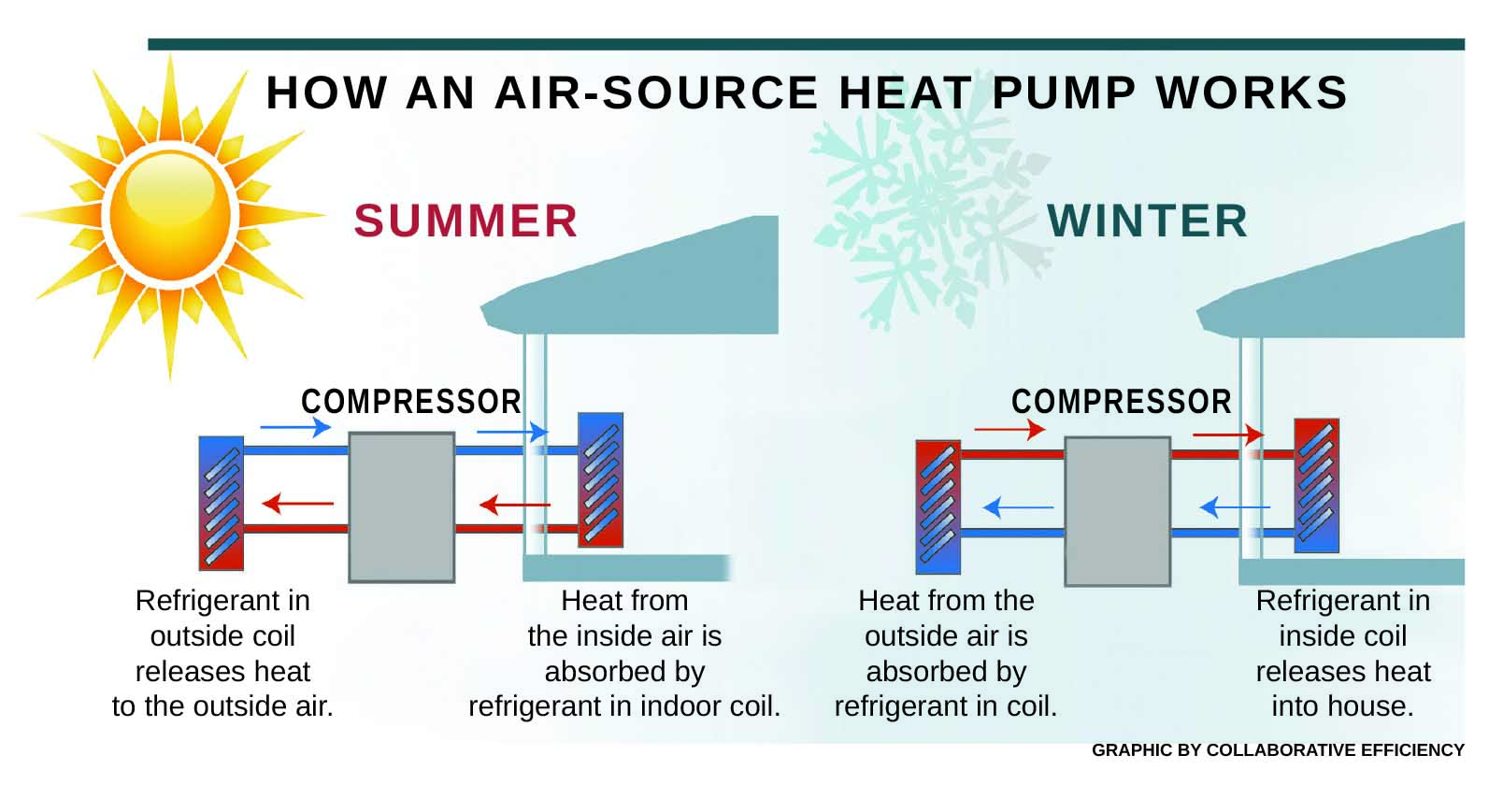
A student asked me to distinguish between a refrigeration and a heat pump cycle--they are very similar processes. In fact, the only difference is in how you use them.
I didn't have a very clear or concise explanation the first time--to be perfectly honest, I realized in that moment that my understanding was incomplete--and I was supposed to explain this to the class. At that point, you can either think really fast on your feet, or acknowledge that you don't know.
Normally I would tell them I'd get back to them.
This time was different.
Refrigeration cycles are an interesting concept because they use materials that boil at very low temperatures. I understand how refrigeration cycles work very well. It's fundamental to much of my work.
In that moment I decided to try and work out the explanation of a heat pump to myself while I did it for them. Kind of risky, but since I knew how the 'opposite' cycle worked, I should be able to convince myself.
And in that moment, I had it! For some reason, the heat pump cycle had previously seemed to have a kind of magical quality to it. For years I never really felt like I understood it.
Now I had the key! And I was able to jump right in and explain it with a metaphor/picture that, while absurd*, made sense.
Normally when these little realizations about how the world works come, I'm not with my 'right' people. That is to say, ChE's. This time however, I had a captive audience of budding engineers, and they weren't allowed to leave.
That's why it was exhilarating: an epiphany in the presence of a captive audience that has the background to appreciate and learn from it.
Most times I would keep something like that to myself and enjoy the moment amidst my lawyer, biologist, accountant, public administration, social worker friends. This time though, I got to share my realization (had to really), and in the process looked like I had my s*** together. I feel like I was made for this.
*a heat pump cycle is basically functioning like a refrigerator for the earth (when the source is geothermal). You are taking 'heat' in the ground (thereby cooling it) that is at a lower temperature than the object to be heated, a house for example, and boiling a (low T, low P) liquid refrigerant. The power input comes in compressing the (low T, low P) refrigerant vapor into a (high T, high P) vapor. That vapor runs through a condenser and gives up its latent heat of vaporization to heat the house. You then throttle the (high T, high P) liquid through a valve back to a (low T, low P) liquid and boil it with low grade heat from the ground to start the cycle again! You're making the ground refrigerated and using that heat in your house! It's the opposite of a refrigerator because our system of interest in a refrigerator is the insulated box--the heat gets expelled to your kitchen (the surroundings). Now, the system is your home, and you're adding heat to it by taking it from the low temperature ground (surroundings)!!! The beauty is that you can reverse the process and have air conditioning--now you're just putting that heat in the ground!
I don't know about you, but I'm never quite sure what to pray while the bread & wine is being passed out during the Eucharist.
Usually it's a time of confession for me--giving myself and my weakness up--sometimes filled with guilt, and sometimes sweet release.
There's probably no 'right' or 'wrong' prayer in this time. The mood is generally of repentance and confession, but sometimes it's easy to think of other parts of our relationship with God.
One of the most common things I think about with God during that time is about our place in relation to him: our place in the cosmos, in his plan, in the lives of those around us; in a word, cosmology. Or...spirituality.